45th anniversary of the Solidarity movement with President Lech Wałęsadate: 2025-10-17
Marking the 45th anniversary of the Solidarity movement (the peaceful labor uprising that was instrumental in dismantling communism in Eastern Europe) President Lech Wałęsa, leader of Solidarity and Nobel Peace Prize laureate, is conducting a Grand Lecture across 28 cities in the United States and Canada.
The tour began on August 31, 2025, in Los Angeles, date chosen to coincide with Day of Solidarity and Freedom in Poland. The goal is to reflect on the past, confront the present, and offer a vision for the future of democracy.
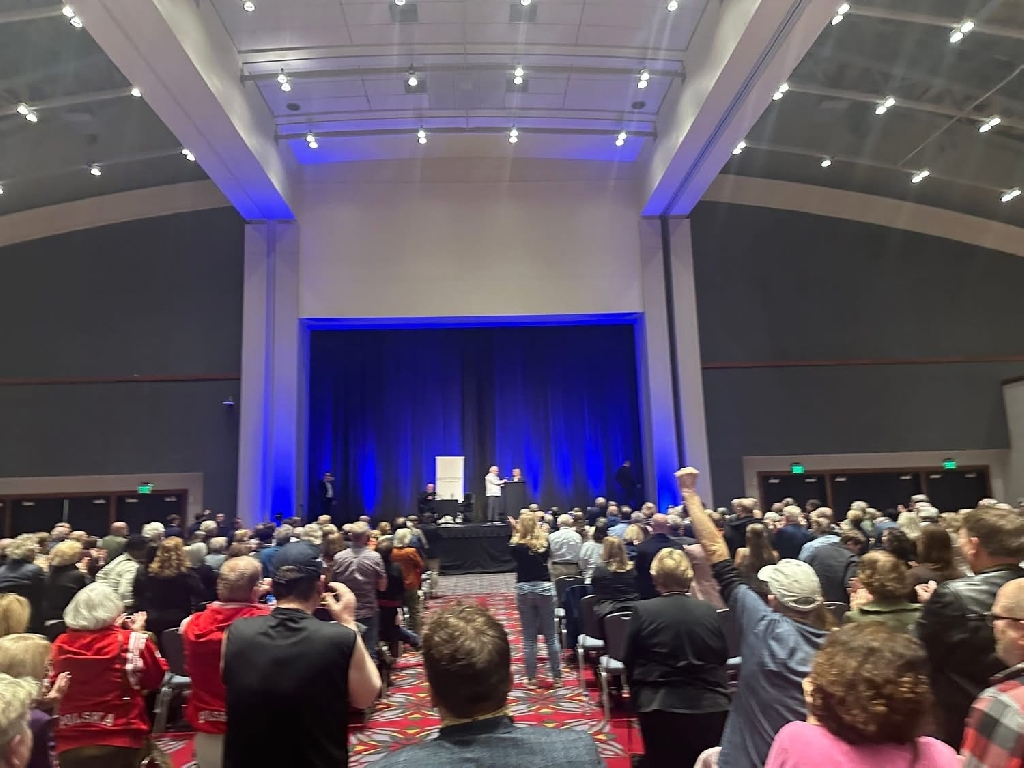
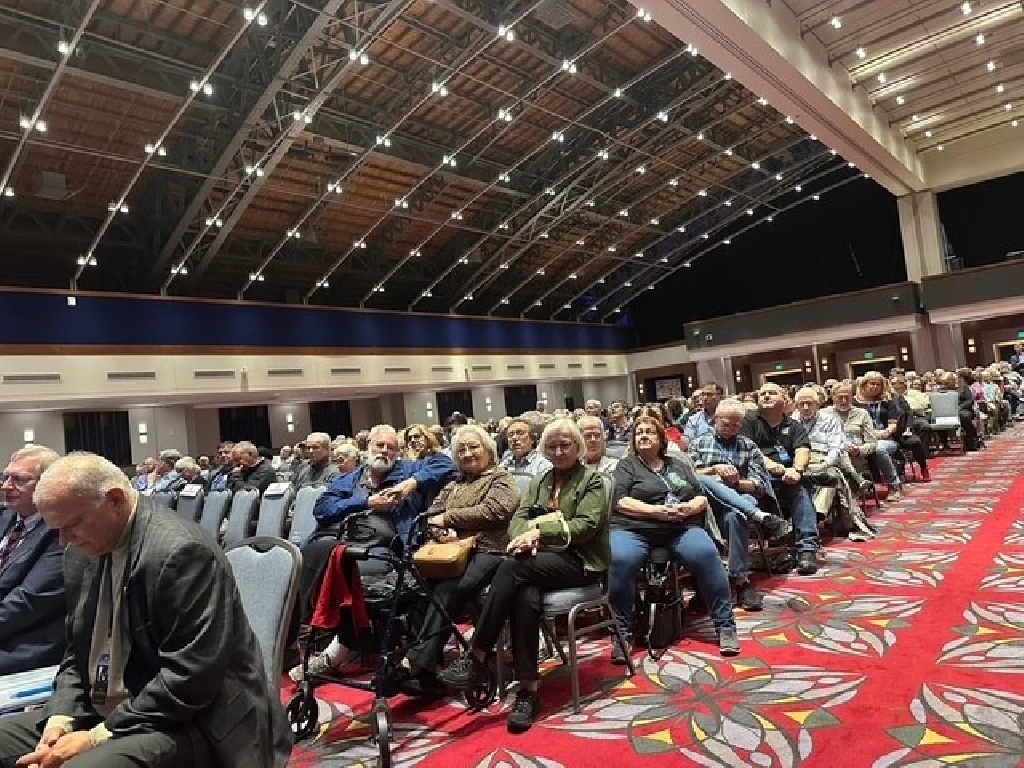
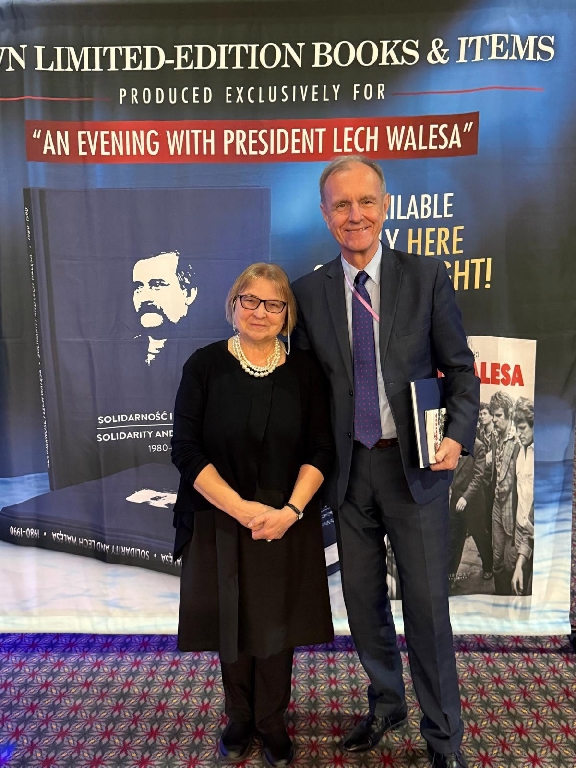
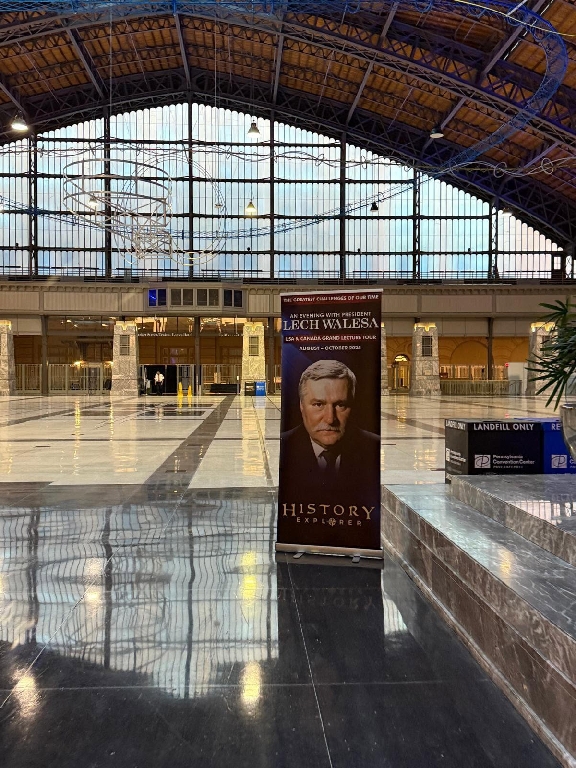
On October 17, President Wałęsa, visited Philadelphia. More than 650 people attended. Judging from the questions from the audience, the entire political spectrum of opinions was represented. Ambassador Klich was in attendance.
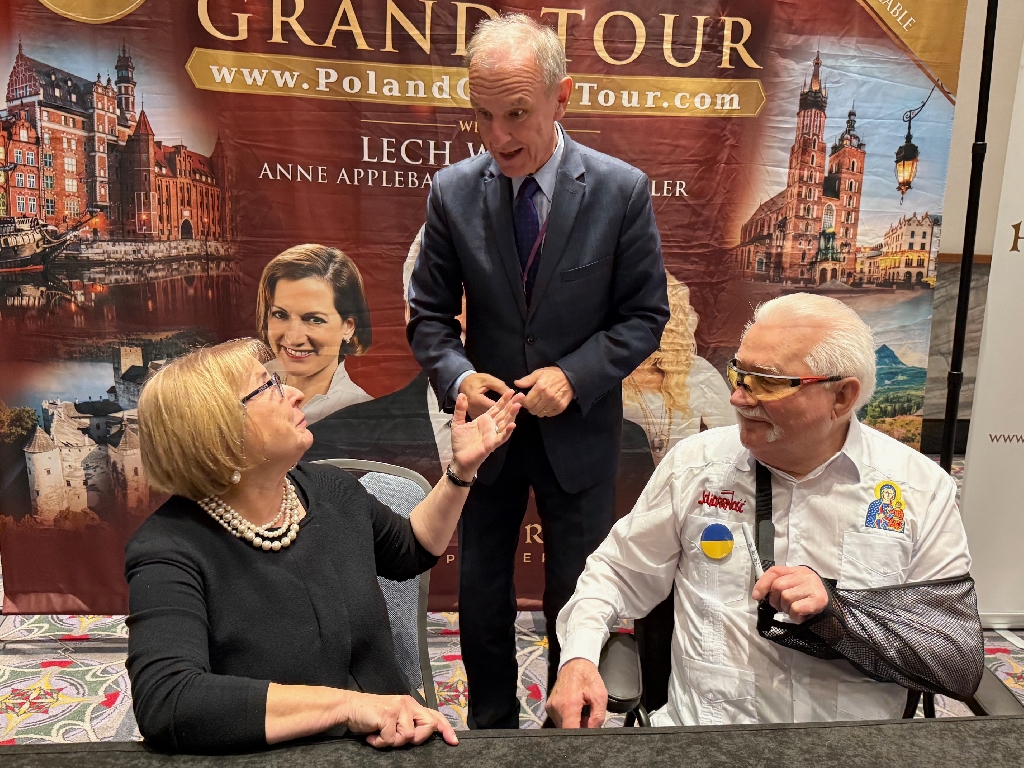
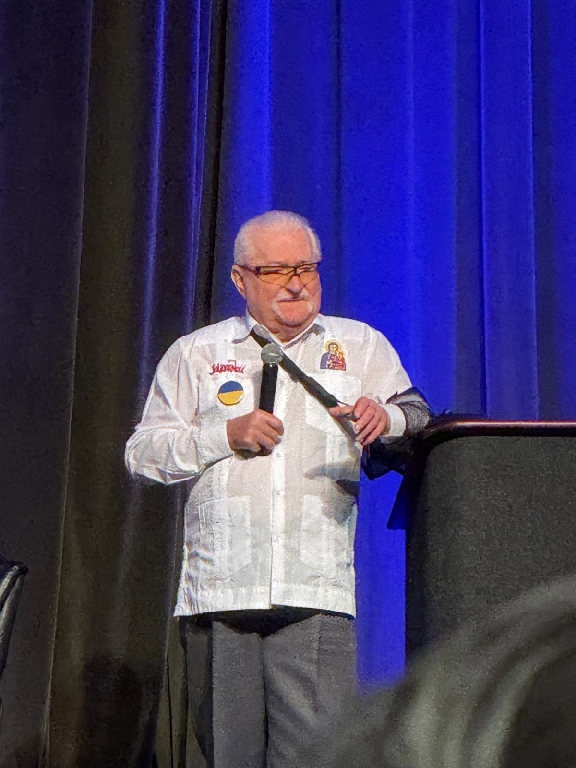
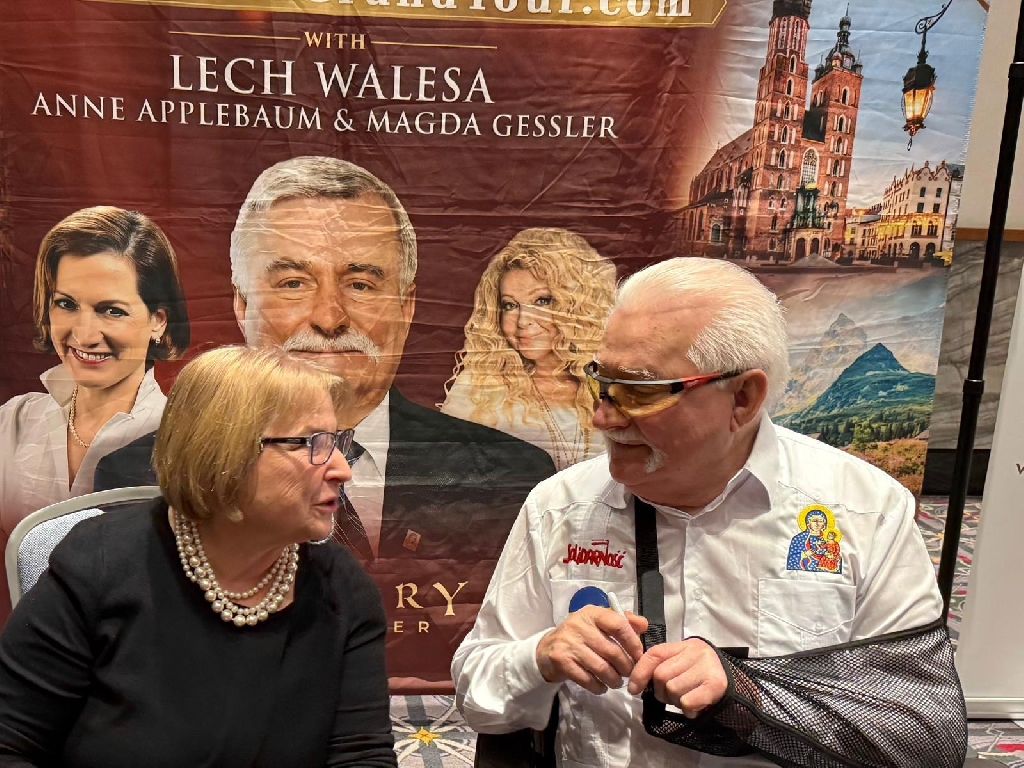
Lech Walesa is 83 years old. He had just had two major operations, his hand was in a sling, but he stood there for over an hour giving a speech from memory, and then for another hour answered live questions from the audience. It was just him and the interpreter. It was quite a show of stamina for a man of his age. Moreover, afterwards, he sat down and signed books and took photos with attendees. Almost everyone joined a lengthy line to have him sign a book. Polish Ambassador Bogdan Klich was in attendance.
He first gave his speech about what he sees as key issues before the world now and his suggestions on how to attack them. In his view, many problems cannot be solved by any one country alone. The US has led the world in the creation of international order before, and the US needs to resume its role. Accoring to him, the current drama is that the US does not want to lead anymore, and China and Russia, and others will take advantage. The EU, for example, was a tremendous economic arrangement for trade, beyond traditional European nation-states that fought all the time. However, to function, the EU created a massive bureaucracy (which was needed since European nations do not trust each other). However, people hate that bureaucracy and do not understand the value of the EU or even the UN anymore, so UN has the same problem as the EU. The issue is that we need the world to keep developing and evolving. He thinks that the longer we work together and the more we learn to trust each other, maybe the need for bureaucracy will slowly diminish.
He said he sees three key issues:
1. On which fundamentals can some agreement be built when we are so divided. He sees two main approaches: some nations are built on liberties, the rule of law, freedoms, and others focus on religion and values. He is on the side of values.
2. Which economic systems do we choose: communism or capitalism. Communism looks far better in theory; many young people seem attracted to ideals of equality, justice, fairness, all these are nice-sounding terms and ideas. Capitalism, in contrast, often means unemployment, exploitation, dishonesty, and unfair competition. His answer is that communism is good only on paper, but it has never worked; it has never been implemented successfully, it always failed. So, he said, drop communism and choose capitalism.
3. We have democracy in theory, but it is corrupt. We have elections in theory, but they are bought. Politicians mostly worry about money and winning elections. Many are dishonest and corrupt. People see it and reject democracy instead. Demagogues and populists are winning. Now that we have social media, everyone can see how corrupt the current system really is. He would like to see term limits for all offices.
He sees his role in making people talk to each other again, to find solutions. He is too old to have novel solutions, but as long as he gets people to discuss in good faith, people will find needed solutions.
It was a different speech that the one Wałęsa gave to the joint session of the US Congress many years ago, on November 15,1989. That previous one was written Kazimierz Dziewanowski, a prominent Polish writer and journalist who later became Polish ambassador to the United States. Even if not his own, it was beautifully delivered by Wałęsa, a man who had the credibility to speak the words of that speech, for what he and Poland has achieved was indeed extraordinary.
One can see the 1989 speach of Lech Wałęsa to the US Congress on https://www.c-span.org/program/american-history-tv/lech-walesa-addresses-joint-meeting-of-congress/6427